
The short answer
Most dents in a garage door are cosmetic. If the door still opens, closes, and seals smoothly, and the dent is a shallow dish in the flat part of a panel, you're looking at a cosmetic fix, not a safety issue. The dent becomes structural when it's near a hinge, along the top or bottom edge, on a corner, or paired with a door that now binds, sags, or won't seat right in the track. That's the test. Everything below is how to apply it without guessing.
Why garage doors dent so easily around here
Most garage doors installed in this area are steel, often a thin steel skin over a foam core. Steel is strong against wind load, which matters during hurricane season, but it's not forgiving to a direct hit from a bike pedal, a trailer hitch backing in too fast, or a basketball. A single hard impact can leave a dent that looks bad but doesn't touch the door's structure at all. Humidity and the swelling that comes with it mostly affect wood doors and door frames, not steel panels, but a dent in steel that breaks the paint seal gives moist, salt-tinged air a place to sit, and that's where rust starts, especially if you're closer to the coast.
Cosmetic dents: what they look like
- A shallow, smooth dish in the middle of a flat panel section
- No cracking or flaking of paint, just a dent in the metal
- The door still rolls up and down without catching
- No gap or daylight showing around the dented area when the door is closed
- The dent doesn't line up with a hinge, roller bracket, or panel seam
These dents are mostly a visual problem. They don't affect the balance of the door, the opener's ability to lift it, or the weather seal. You can live with one indefinitely, or have it addressed for curb appeal, without any urgency.
Dents that need a closer look
- The dent sits right where a hinge or roller bracket attaches to the panel
- You notice a new scraping or grinding sound when the door moves past that section
- The door looks slightly twisted, or one side seems to close before the other
- There's visible separation at a panel seam near the dent
- The dent is on a corner or along the bottom edge, where the door meets the track or the weatherstrip
None of these automatically mean the door is unsafe, but they mean the dent is doing more than sitting there. A dent near a hinge point can change how the panel flexes every time the door cycles, which accelerates wear on that hinge and the rollers next to it. Over weeks, that turns into a door that's harder to open, noisier, or that comes off track.
When a dent is actually structural
A dent crosses into structural territory when it changes the shape of the door enough to affect how the panels sit against each other or against the track. Signs include a door that no longer closes flush, a visible bow across more than one panel, metal that's creased or folded rather than just dished in, or a track that's been pushed out of alignment by the same impact that caused the dent. This matters more here than in a lot of places because garage doors in this area are often rated for specific wind loads to handle hurricane-season storms. A door that's been knocked out of true shape may not perform the way it's supposed to the next time a high-wind system comes through, even if it still opens and closes fine on a calm day.
If the dent came from something big, a vehicle backing into the door, a tree limb during a storm, or a trailer, don't just evaluate the dent itself. Check the tracks on both sides for any bend or gap, and see if the door sits evenly against the weatherstrip along the bottom. A dent from a low-speed bump with a bike is one thing; a dent from a car bumper is a different conversation entirely.
Repair, panel swap, or full replacement
Cosmetic dents can sometimes be worked out, filled, and repainted, similar to auto body work, though on textured steel doors the result isn't always invisible. Panel dents near hardware are usually better solved by replacing just that panel, since garage doors are built in sections and most residential models allow a single panel to be swapped without replacing the whole door. Full replacement only makes sense when the frame is bent, multiple panels are affected, or the door is old enough that matching panels isn't practical.
When to call Ponce de Leon Door & Opener
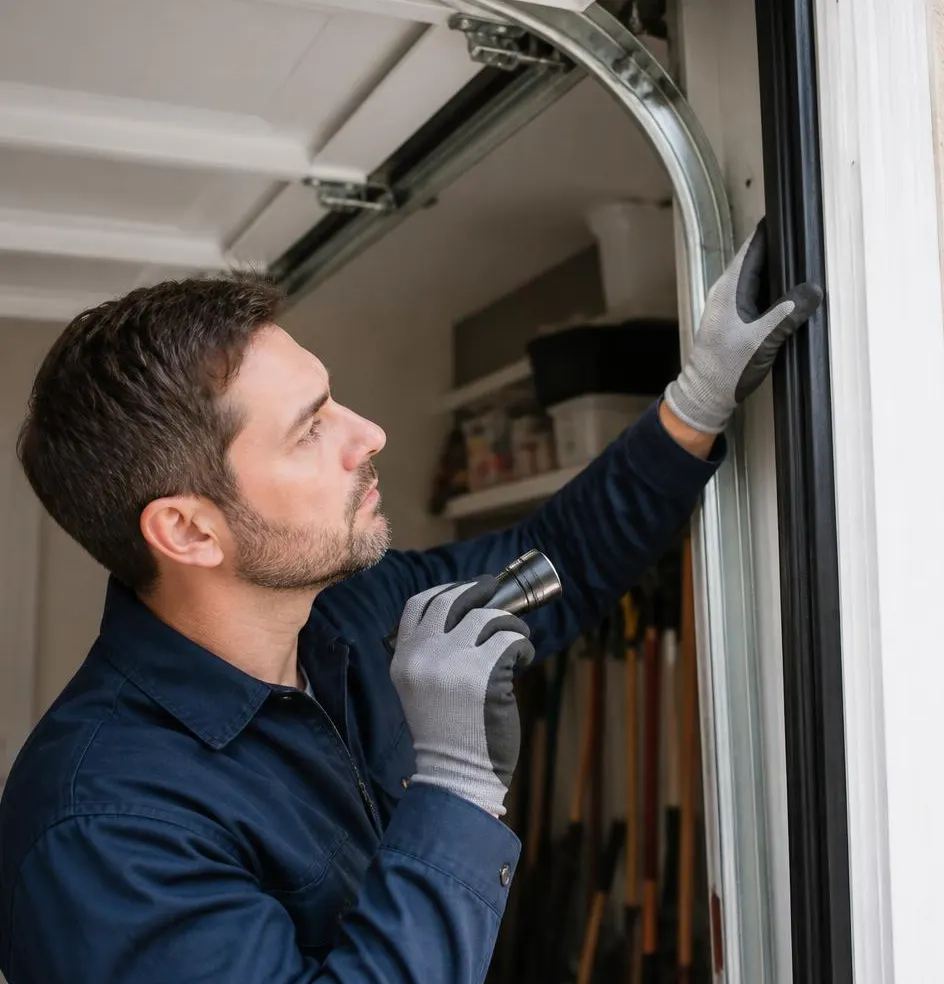
If you're not sure whether a dent is affecting the door's movement, that's exactly what a quick inspection settles. We can tell you on the spot whether it's a cosmetic issue, a candidate for Garage Door Cable & Roller Repair if the impact knocked hardware out of alignment, or a case for panel or full Garage Door Installation & Replacement if the frame or multiple sections are compromised. We'll also check your tracks and balance while we're there, since a dent is often a sign something nearby took a hit too.
If you've got a dent you and your spouse can't agree on, call Ponce de Leon Door & Opener and we'll settle it, serving Ponce de Leon, DeFuniak Springs, Bonifay, Freeport, and the rest of the US-90 corridor.